By MINH LE
•
May 29, 2026
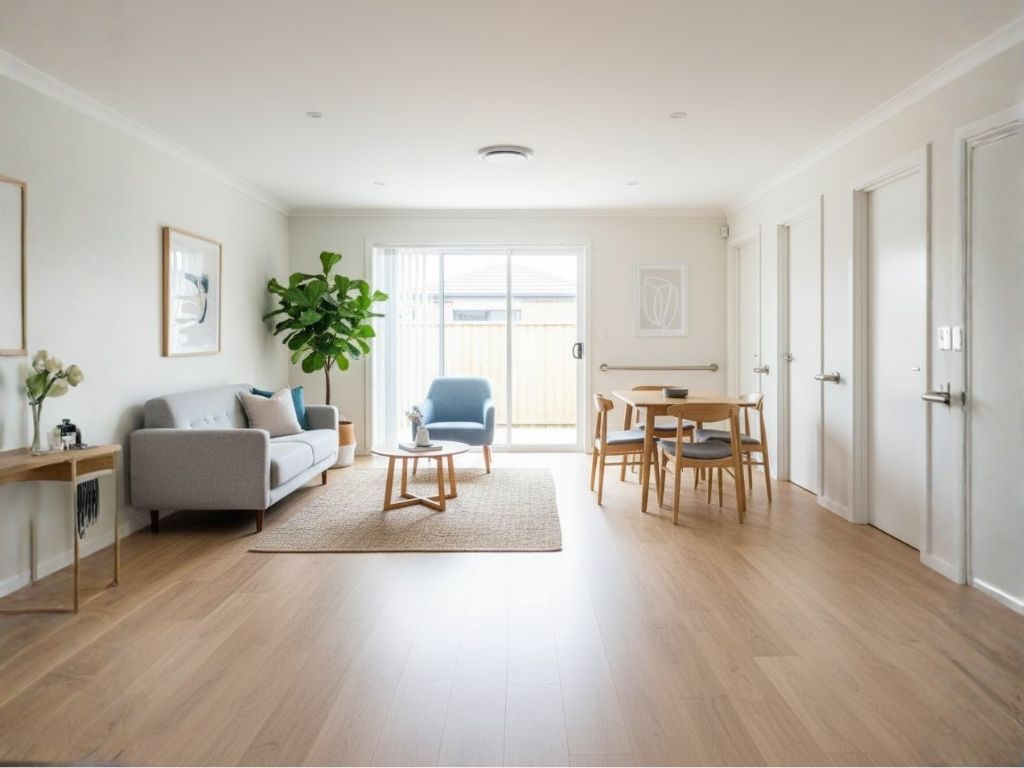
If you’re looking at the Specialist Disability Accommodation (SDA) sector in 2026, forget everything you heard during the early boom years. The market today bears little resemblance to the opportunity pitched to investors half a decade ago. The early excitement has faded, and success now depends on looking well beyond the advertised returns. From Early Euphoria to Hard-Earned Experience Not long ago, SDA was commonly sold as a rare triple threat: high income, government underwriting, and generous tax benefits—all delivered with minimal effort. Fast-forward to 2026, and the picture is much more nuanced. Across outer-suburban developments, newly constructed homes are sitting empty for months, a clear sign of localised oversupply. This isn't necessarily a flaw in the SDA concept itself. Rather, it marks a natural evolution. The market has grown up, and in doing so, it has revealed the stark gap between glossy marketing claims and the actual, on-the-ground needs of participants. What Drove the Shift in Market Conditions? SDA was originally created to finance specialised housing for individuals with severe functional impairments or extremely high support needs. Property owners receive annual payments only when an eligible NDIS participant resides in the home. Between 2018 and 2022, the sector experienced explosive growth, attracting builders, promoters, and investors in droves. However, a critical assumption proved false: national participant numbers do not automatically translate into demand for every SDA property, in every postcode. The reality is that SDA demand is intensely local, varying dramatically from one neighbourhood to the next. The Four Non-Negotiable Questions for 2026 A mature SDA market demands a much more rigorous, disciplined approach. Before committing capital, investors must ask four essential questions: Occupancy Certainty: Is there a genuine NDIS participant—with active, approved funding—living in a specific location who actually requires this exact type of home? Revenue Certainty: How reliable is the payment stream, and are the pathways for participant access becoming more restrictive over time? Operator Competence: Does the provider have the operational systems, a genuine pipeline of tenants, and the financial resilience to place and retain residents? Asset Fit: Does the property genuinely align with the disability profiles and needs of participants in that immediate community? These four factors now outweigh any headline rental yield. The Vacancy Challenge: Tenancy & Funding Realities Vacancy is arguably the biggest headache in today's market. Nationally, vacancy rates are elevated, and in oversupplied regions, the wrong property in the wrong location can lead to years of poor financial performance. It's also critical to understand the distinction between SDA and SIL (Supported Independent Living). SDA covers the physical dwelling, while SIL pays for personal support services. In practice, most participants require both. This reality makes strong, integrated relationships with providers—and smart placement models—vital for maintaining ongoing occupancy. Why Provider Quality Can Make or Break Your Investment As market conditions have tightened, the quality of providers has become a central concern. In the early days, almost anyone could set up as an SDA operator. Today, the regulatory and operational bar is much higher, and some providers have expanded beyond their actual capacity to manage their portfolios effectively. Investors need to scrutinise management agreements with extreme care. Some contracts contain clauses that make it very difficult to switch providers down the track. Without a clean and practical exit route, your SDA property becomes less of a passive asset and more of an entangled partnership. Location & Design: Why "SDA-Compliant" Isn't Enough A common mistake is treating SDA homes as standard residential properties with slightly wider doors or larger bathrooms. They are not. These are purpose-built dwellings that must be tailored to the actual participant cohort living in that area. A build might technically meet all design specifications—fully accessible, robust finishes, etc.—but that doesn't automatically mean it meets local demand. There are too many cookie-cutter SDA designs that have been dropped into suburbs with insufficient participant density to support them. Practical Steps for Investors Right Now For current owners: Conduct a thorough, honest review of your provider. Stress-test your cash flow using realistic vacancy scenarios (not best-case assumptions). Seriously evaluate whether a SIL head lease or a defined exit strategy makes sense for your situation. For prospective buyers: The due diligence bar in 2026 is significantly higher than it was three years ago. Only consider properties that come with a documented tenancy pipeline, a proven and robust provider, and a location that clearly aligns with local participant demand. The Bottom Line SDA remains a potentially strong asset class—but only for those who treat it as what it truly is: an operationally intensive, tenancy-driven investment, not a passive income stream. In 2026, thorough due diligence isn't optional. It's the only thing standing between solid returns and prolonged underperformance.